This page is the record. Every item below traces to a request raised by a client in a review session, with the date they asked and the date it went live. Nothing here came from an internal roadmap meeting.
Smarter matching, easier coordination, and more control for every community.
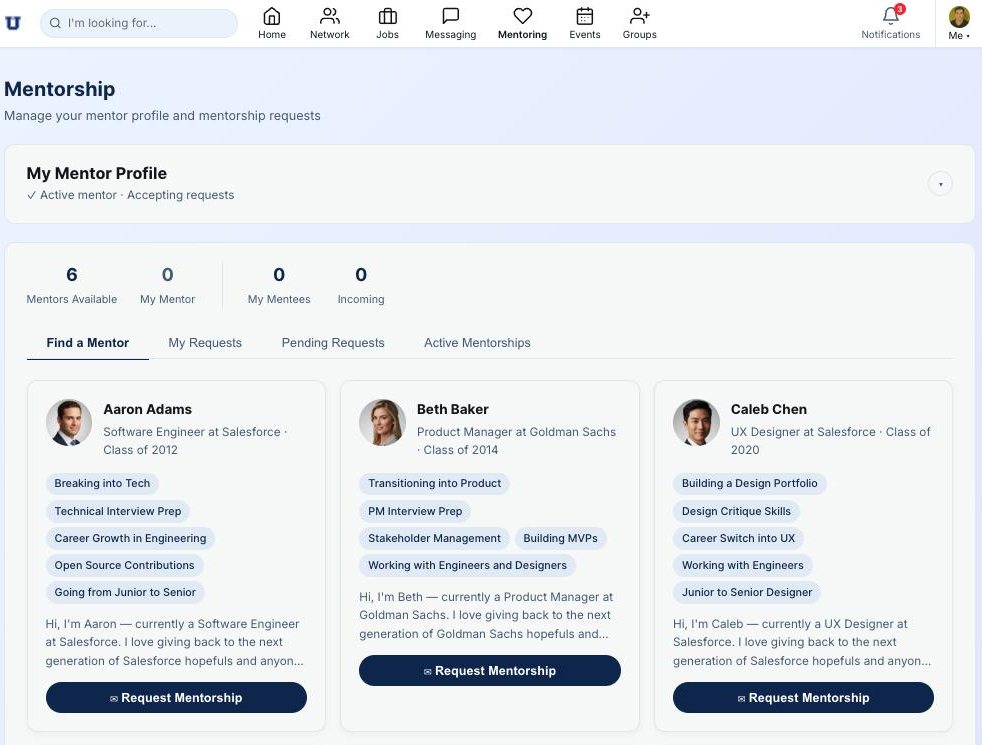
Mentor, alumni, and mentee recommendations now focus on meaningful expertise instead of filler words. Members see cleaner match reasons, and older shortlists are brought up to the same standard automatically.
The mentorship journey now continues beyond the introduction with follow-through prompts, private coordination, and clearer recovery when a step needs another try. Nearby Alumni introductions also stay private until a member's own discovery settings are ready.
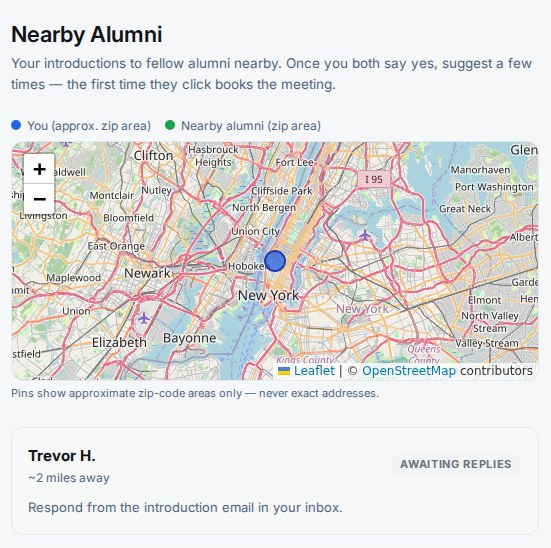
Members can connect Google Calendar or Microsoft Outlook so meeting suggestions respect their real availability without exposing calendar details to other members. Confirmed gatherings can be saved to a member's calendar, and later changes stay synchronized.
Calendar selection and saving are more reliable, event descriptions can show useful link previews, and new-event handling keeps the event experience current from invitation through attendance.
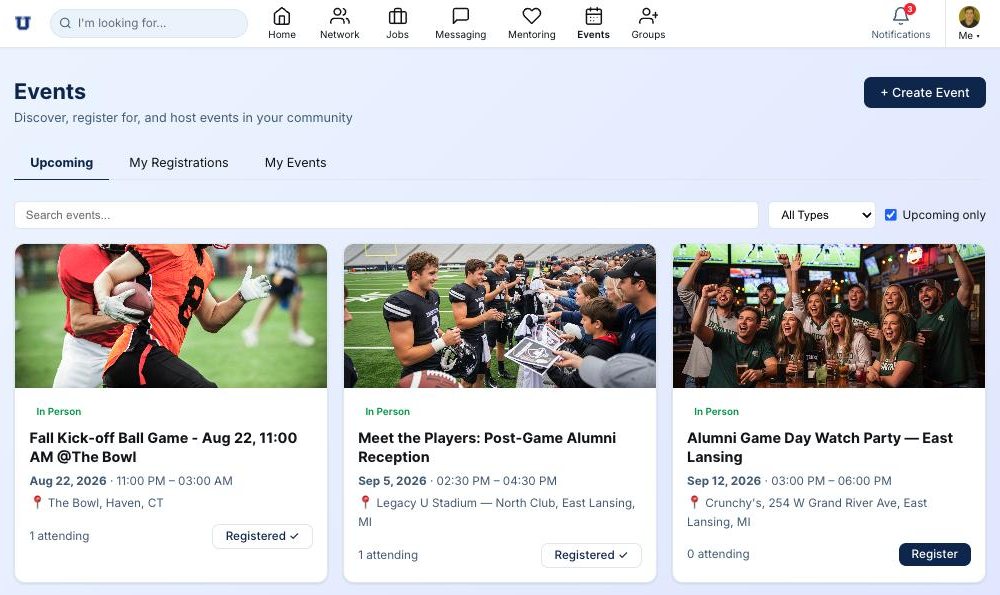
Tenant-wide notifications can now be scheduled for a future date, edited while they are waiting, or cancelled permanently. The recipient list is preserved at scheduling time, so a delayed notification goes to exactly the audience the author reviewed.
Rich posts keep their formatting and inline previews when edited. Link previews no longer multiply or disappear during an ordinary correction, and scheduled content remains manageable without deleting and starting over.
Event attendance can improve recommendations without revealing private attendance history. Members get private, explainable controls for what they want help finding, while event coordination stays visible only to the people involved.
Email preferences now follow the member within each community. Unrelated account changes no longer overwrite application-status choices, members can resubscribe deliberately, and blocked members cannot trigger email or push notifications.
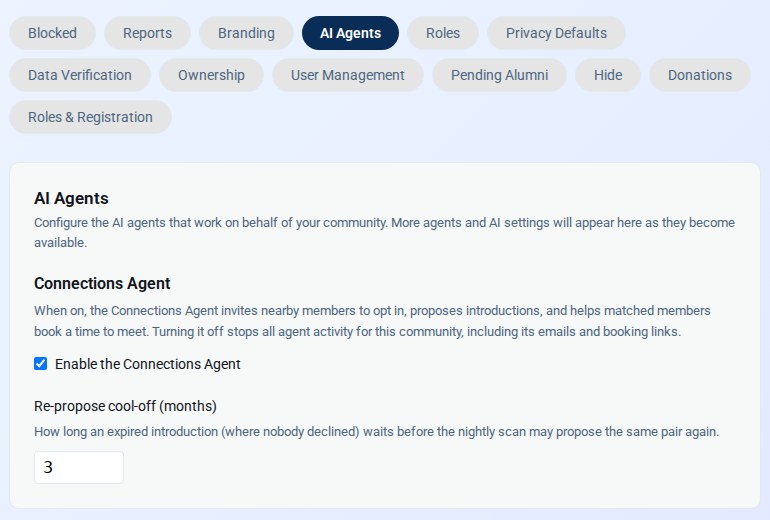
The first Catalyzr AI agent, shipped with the controls to run it.
The Connections Agent scans nightly for opted-in members who live near each other and proposes an in-person introduction. When both say yes, it suggests times and the first tap books the meeting — no back-and-forth.
The new Nearby Alumni page shows every introduction on a privacy-safe map. Pins mark approximate zip-code areas only — never exact addresses — and members are invisible until they personally opt in. Only a name is shared, plus class year if it's on the profile.
When both members accept, the agent connects them in the app automatically — no second step, no admin involvement. The introduction is already a live connection by the time they check their inbox.

Client Settings gained a dedicated AI Agents tab — the home for every agent we ship. The Connections Agent lives there today: one switch to turn it on, and a cool-off control for how long the agent waits before re-proposing an expired introduction.
Every community ships with the agent off. Nothing scans, nothing emails, and no member is discoverable until a Client Admin decides to turn it on.

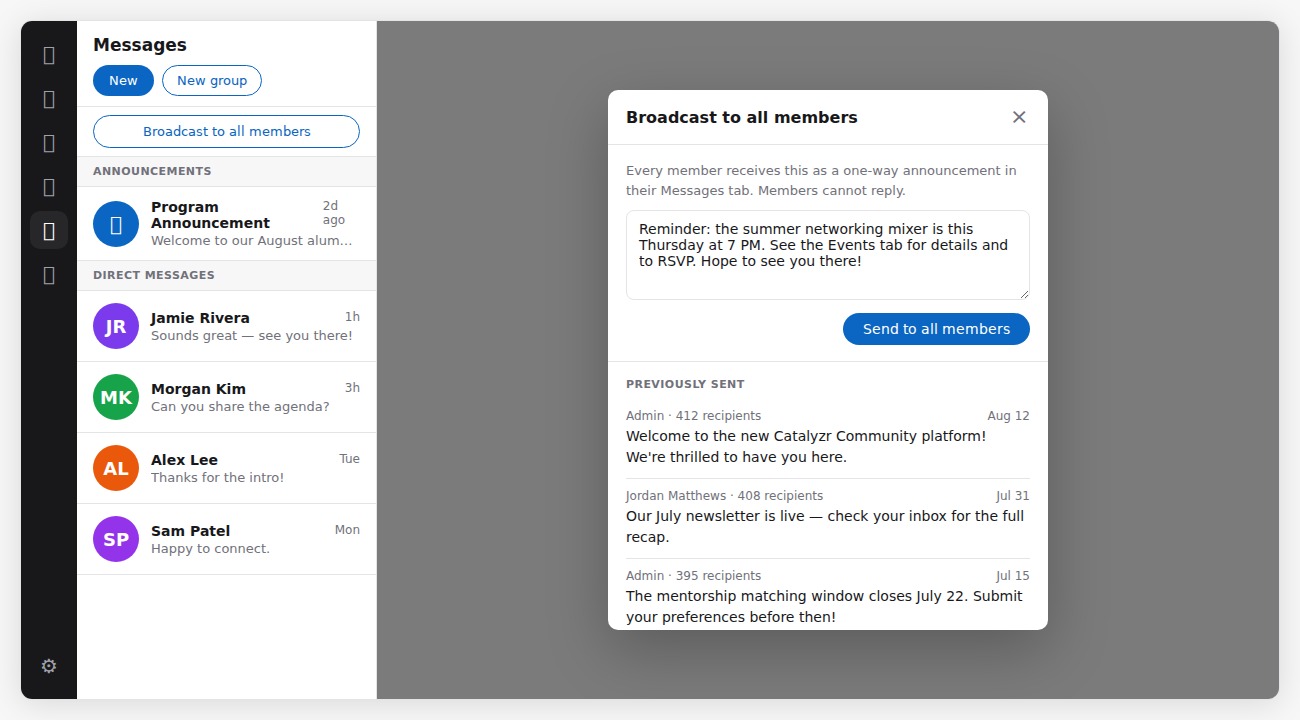
Managers — the staff who handle day-to-day operations — can now send a broadcast to all members without needing a Client Admin to do it for them. The button appears in Messaging the moment the capability is on.
Client Admins decide whether to grant it. A new toggle in Client Settings → Roles & Capabilities turns Manager broadcast access on or off per community. It ships off by default, so nothing changes for existing communities until an admin chooses to enable it.

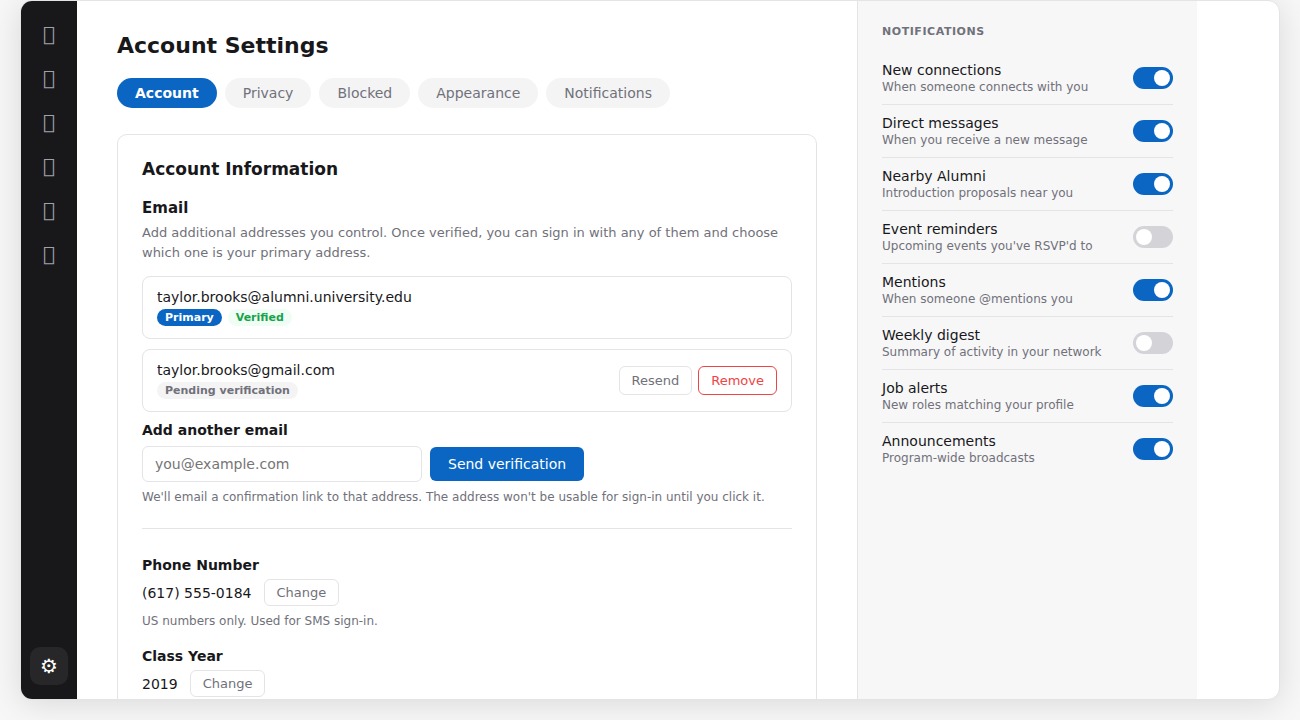
The Account tab now handles email addresses, class year, and zip code alongside the existing profile fields — no more switching tabs to find something. Channel notification preferences moved to Account → Notifications, where they sit next to the digest and mention controls.
The standalone Email tab is gone. Class year and zip update the same record as the profile editor, so there is no version to reconcile.

Raised July 20 and July 23. In production by July 30.
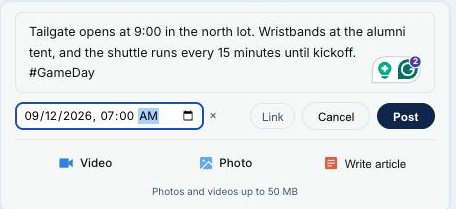
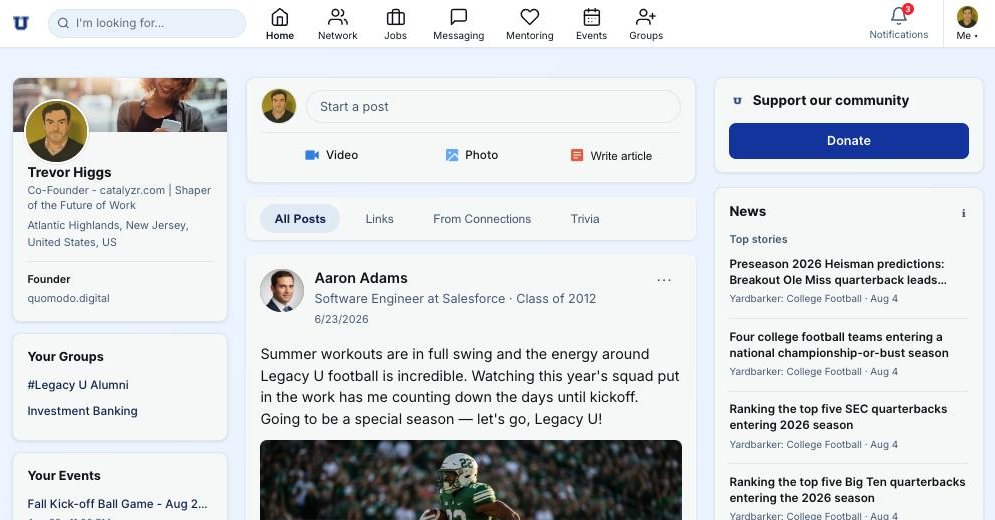
Write the post now, set the date and time, and it publishes itself. Tailgate details at 7:00 Saturday morning, a kickoff reminder at 10:00, trivia Monday. All of it queued in one sitting.
Times follow the community's time zone rather than the device you are holding, so a staffer travelling with the team does not have to convert anything. Anything queued can still be edited or cancelled before it sends.

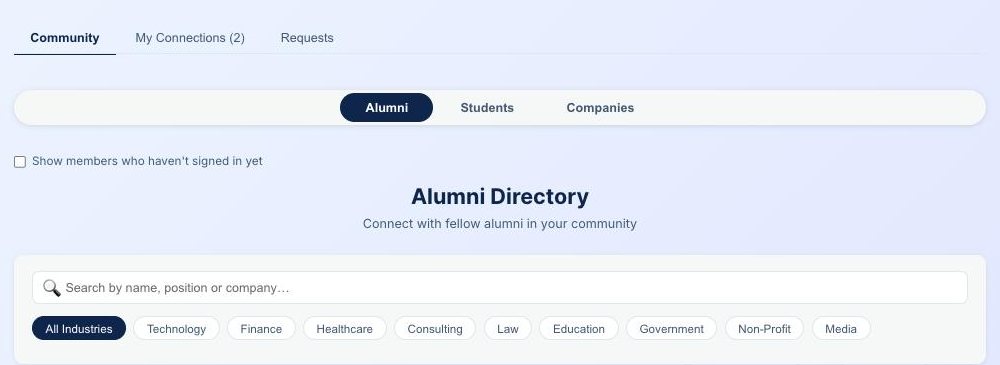
Preloaded profiles, whether alumni or athletes, stay out of the member-facing directory and search until that person completes their first login. Admins keep the full roster with a status on every record.
Members were sending connection requests to people who had never opened the app, then reading the silence as rejection. A profile becomes visible the moment its owner signs in. Nothing for staff to approve.

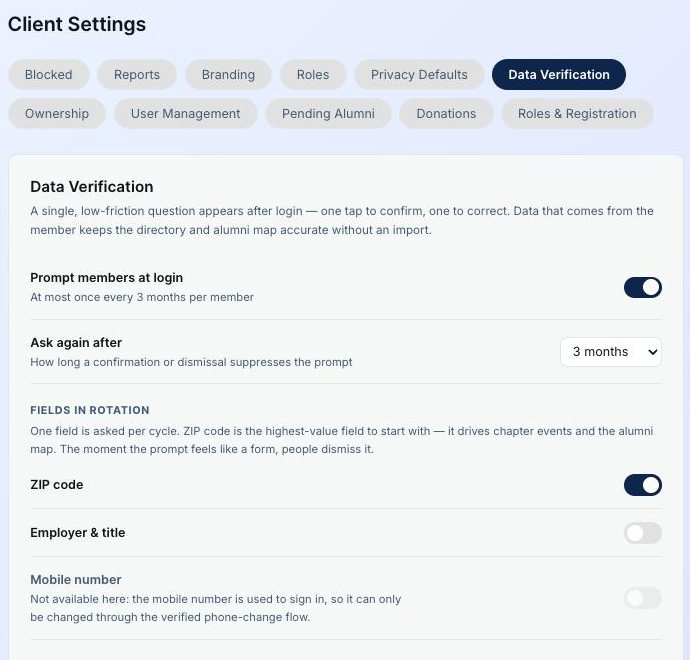
A single low-friction prompt asks a member to confirm or correct one field. One tap to confirm, one to fix. Admins choose which fields rotate through and how often members are asked.
Archived files decay. Asking the member is faster, cheaper and more accurate, and one tap is a low enough price that people answer. This is also the groundwork for the alumni map, which is only as good as the location data underneath it.

Posts and events can now be corrected in place, so a wrong event date no longer means deleting and reposting and losing every like, comment and RSVP already collected.
Hashtags became live filters in the same release. Tap one and the feed shows every post carrying it, which gives a giving day or a reunion weekend a home without anyone building a page. Links paste in and render their own preview.

A link post pulls the image, the headline and the description straight from the page. Nobody formats anything, nobody pastes HTML, and the result looks like it was designed for the feed rather than dropped into it.
Weekly trivia shipped in the same release with its own tab, so a program can run a recurring engagement format without inventing one. Both collect on their own feed tabs, which means a member can browse everything that has been shared without scrolling past it.

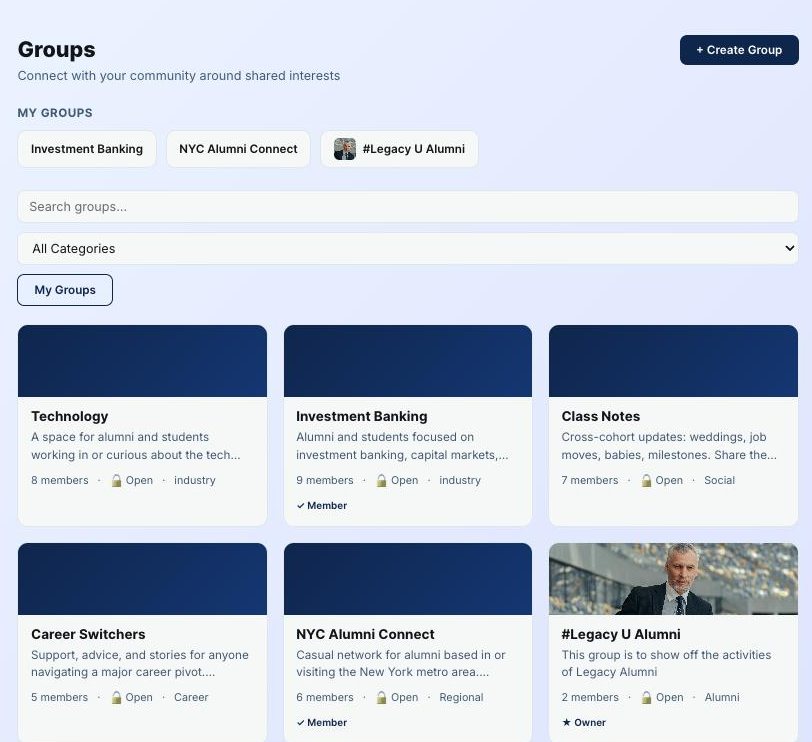
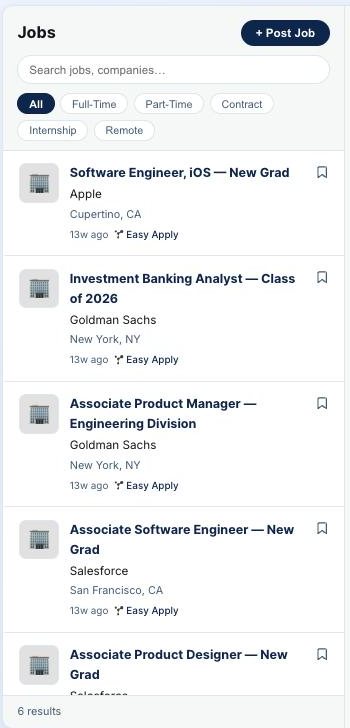
This work is not a feature list bolted onto a directory. It lives in a platform that already runs mentoring, jobs, events and interest groups for a program's alumni.


Every release starts with someone at a client program saying what is getting in their way. If you want to see how the cycle works from the inside, we will walk you through the current queue, including what we have decided not to build.
Talk to us